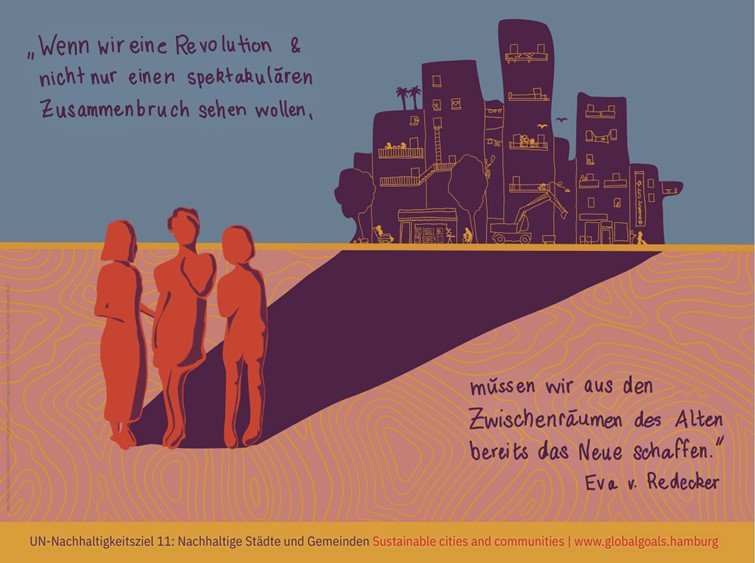
Global growth of cities and their role in sustainability
More than half of the world’s population currently lives in cities. By 2030, an estimated 5.3 billion people will live in cities, and by 2050, two-thirds of humanity will reside in urban areas. In Germany, the proportion of the urban population is expected to increase from the current 77% to 84% by 2050.
Already today, cities generate around 70% of the global GDP while also producing around 70% of greenhouse gases and waste. Almost all the challenges and issues related to living together and the future of humanity are concentrated in cities. They are centers of high resource consumption, contributors to growing pollutant emissions, and focal points of social inequality. However, they are also places of economic, technological, social, political, and cultural change, playing a key role in achieving global climate and sustainability goals, such as the transition to post-fossil energy systems. Urban centers can serve as powerful catalysts for sustainable and inclusive transformation processes, making the sustainable, climate- and socially just development of cities of immense global significance.
Cities can serve as blueprints for the future of humanity, as places where their inhabitants can live without fear or discrimination, have equal access to urban structures and services, find adequate housing, and achieve a good livelihood through dignified work, without disadvantaging or endangering people in other regions.
Vision of a good city for all
“The society of the future will not be able to do without social architecture and humanistically oriented planning creativity: an opportunity, a challenge for architecture and urban planning, which must transcend the boundaries of their own disciplines far more than before.” (Jörg Friedrich, “A Plea for the Growing House,” in: Zukunft: Wohnen, 2017: 14ff.)
The vision of a good “City for All” is also the theme of the United Nations’ Global Sustainability Goal (SDG) 11, and its sub-goals confirm the above quote. The focus is on:
- Ensuring access to adequate, safe, and affordable housing and basic services.
- Guaranteeing access to sustainable transportation systems.
- Improving road safety.
- Strengthening sustainable urban planning.
- Improving disaster protection.
- Reducing environmental impact.
- Ensuring access to green spaces.
- Supporting economic, ecological, and social connections between urban, peri-urban, and rural areas.

Advancing the ambitious goals of SDG 11 internationally
To advance the ambitious goals of SDG 11 internationally, the New Urban Agenda was adopted at the UN Conference on Housing and Sustainable Urban Development (Habitat III) in Quito, Ecuador, in 2016. It is understood as a roadmap, a global framework for sustainable urban development, and is available in over 30 languages. The Urban Agenda Platform connects stakeholders and documents the progress of SDG 11 implementation worldwide. It is aimed at both national governments and UN organizations, as well as local authorities, civil society organizations, and all stakeholders involved in sustainable urban development.
In the same year, the “Pact of Amsterdam” was adopted, outlining the new Urban Agenda for the EU. It provides guidelines for addressing issues such as poverty, housing, digital transformation, mobility, and refugees in European cities. The position paper on implementing the New Urban Agenda in Germany is available here. Another important reference document for official policy on sustainable urban development in the EU is the Neue Leipzig Charta from November 2020.
No sustainable urban development without civil society
What is remarkable and new about the global New Urban Agenda is its emphasis on the importance of civil society: without civil society, there is no sustainable urban development. This is a clear message throughout the document. This applies even to so-called megacities—cities with more than 10 million inhabitants—that must manage the influx of more and more people, providing them with housing, work, functioning infrastructures, and a livable environment. The importance of civil society-driven approaches, such as bottom-up projects, especially in areas like food security and climate adaptation, is evident in a series of case studies from around the world that tell inspiring stories of local engagement, cooperation, and citizen participation.
Another challenge for settlements and urban centers is the high number of people migrating from rural areas or other countries into cities, fleeing war, persecution, and displacement, or due to the loss of their livelihoods from climate change, land grabbing, industrial mega-projects, or changes in the global labor market. They seek refuge, housing, work, education, and healthcare in cities. Ensuring these basic human needs requires not only the initiative and participation of the affected individuals but also the willingness of urban planners to work together and engage with these people on equal terms to drive fair and inclusive urban development forward.
The German government also emphasizes in its aforementioned position paper the necessity of involving citizens in building livable, climate- and socially just cities. At the same time, however, the freedoms of human rights and urban activists are increasingly being restricted worldwide. Current case studies from Quito, Istanbul, Rio, Nairobi, Karachi, Mumbai, Mexico City, and Cape Town illustrate how the impoverished and marginalized urban population, as well as housing and land rights activists, are increasingly being “viewed as an obstacle to development because they denounce corruption, homelessness and forced evictions, police violence, and the systematic violation of the rights of the most disadvantaged.” (Source)
The right to the city
The greatest success of civil society urban movements is the inclusion of the “Right to the City” in the vision of the New Urban Agenda (Point 11). For more than 50 years, the social urban movement, now unified under the call for a “Right to the City,” has been advocating for a global vision of social, inclusive, and participatory cities that can be collectively used, shaped, and enjoyed by their inhabitants. The inclusion of some of the demands of the Right to the City movement into the global New Urban Agenda of the UN represents a significant opportunity for global sustainable urban development.
The “Right to the City” is a political concept aimed at opposing exclusions, such as those caused by social displacement processes (gentrification) and the privatization of public spaces. The concept was first introduced by French urban sociologist Henri Lefèbvre (1968). According to him, the city, once a place of creative creation, is increasingly being subjected to industrial exploitation logic. At the same time, he believed that the city holds enormous revolutionary potential that could lead to the formation of an emancipated urban society.
With the Right to the City, several additional rights are associated, according to urban sociologists: for example, the “Right to Centrality,” the right “to access the places of social wealth, urban infrastructure, and knowledge,” and the “Right to Difference,” which represents the city as a place of meeting, recognition, and engagement. (Source)
For the U.S. American social theorist David Harvey, “(t)he question of what kind of city we want (…) is inseparable from the question of what kind of social relationships, what relationship to nature, what lifestyles, technologies, and aesthetic values we desire. The right to the city is much more than the individual freedom to access urban resources: It is the right to change ourselves by changing the city.” (Source)
The initiatives and activists advocating for the Right to the City interpret Lefebvre’s utopia as a claim that can only be fulfilled collectively and is open to all. Right-to-the-City groups demand collective participation in political decisions and design processes. The city becomes a place where another way of life is possible – a city for all! It is the radical alternative to top-down urban development concepts. It is a clear rejection of the “car-oriented city,” the “entrepreneurial city,” and the “smart city.”
For more on the Right to the City movements in the context of the DeGrowth concept, click here.
Housing shortage and empty city centers
For decades, urban planning, especially in large cities like Hamburg, has been shaped by market-driven interests of the real estate industry and retail trade. City centers were owned by businesses and shoppers, while residential areas were located elsewhere. This has contributed to the decline of city centers – a development that was significantly exacerbated and made visible by the COVID-19 pandemic.
However, not everyone draws the conclusion that city centers should be made a central living and residential space for urban dwellers once again. In an article in ZEIT Hamburg from April 2021, the authors lament the decline of Hamburg’s city center but only give a voice to wealthy property owners. Rather than focusing on sustainable concepts with citizen participation, the discussion centers on how profits can be secured in the future – a future that should belong to everyone.
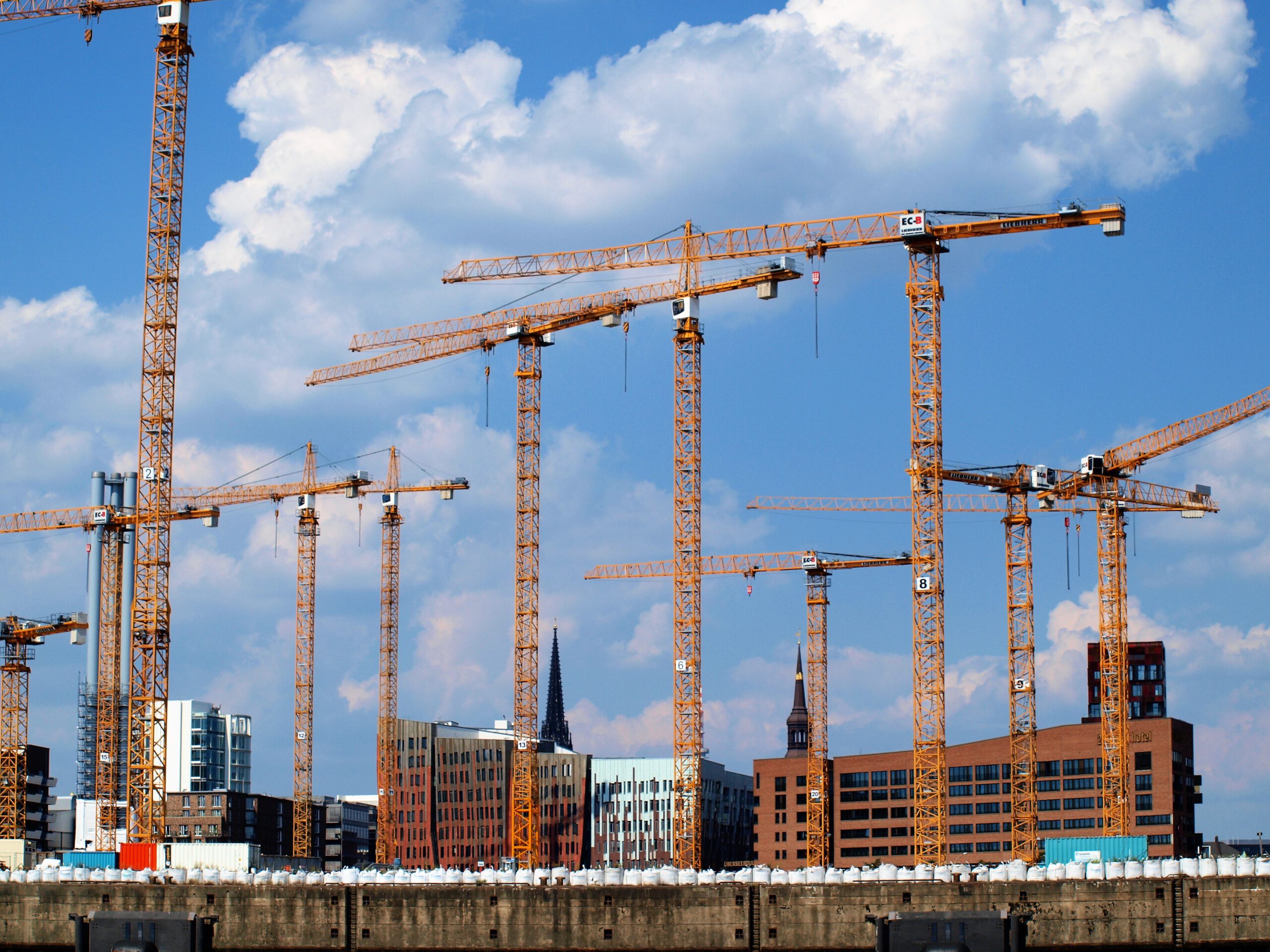
In Hamburg and other cities, not only are city centers dying, but people are also dying who do not have access to adequate housing, as the Hinz & Kunzt homeless magazine frequently reports. Urgent new urban planning concepts are needed: existing buildings must be used more intensively (e.g., by adding more floors), commercial areas must also include housing for people, empty hotels can house homeless individuals and refugees, and urban land must belong to the city and, by extension, to all urban residents, rather than becoming a commodity for speculation by the real estate industry.
It is irresponsible, for example, that the so-called Holsten area in the heart of Hamburg-Altona has been passed back and forth among various owners for years, generating profits, while remaining undeveloped. At the same time, 13,000 people with urgent housing requests are waiting for an apartment in Hamburg. At the same time, the search for more (affordable) housing should not lead to the continuous sealing of green spaces, the destruction of habitats for plants and animals, the reduction of biodiversity, and the exacerbation of climate change. The right to access green spaces and ecologically intact recreational areas is as much a fundamental right for urban residents as the right to housing. Therefore, these needs and ideas must be the starting point of every sustainable urban development.
Hamburg network and initiatives
The “Right to the City” is a central theme everywhere. This is also the name of a grassroots network founded in Hamburg in 2009. Originating from the Hamburg Alliance, this demand has become a key reference point for urban social movements in the German-speaking world and has led to similar coalitions with their own platforms in various German and European cities.
In the Hamburg “Right to the City” network, around 50 local initiatives have come together, most of which work on a district level and operate in different contexts and communities. Through public relations work, protests, and actions, they fight against rent gouging and vacancies, support tenants facing eviction, expose housing scandals, criticize profit-driven housing companies, and demand active social and housing policies from the city. In their core program, they call for collective and solidaristic self-organization, emphasize the enrichment of urban life through the diversity of newcomers, and resist exclusion, displacement, privatization, and commercialization.
The Zukunftsrat Hamburg (Future Council Hamburg) is a coalition of non-governmental organizations that seeks to provide critical commentary on politics. It advocates for the formulation of a sustainability strategy, promotes citizen participation in political processes, and mobilizes, networks, and informs on sustainability issues.
Stattreisen offers harbor tours and city walks to hidden and forgotten places in Hamburg, as well as themed tours on “Hamburg and the Right to the City,” street art, and architecture and urban planning.

The Mietshäuser Syndikat advises self-organized housing projects interested in the syndicate model, participates in projects to take them off the real estate market, provides know-how in project financing, and initiates new projects.
The Gartendeck St. Pauli is an urban garden that was established in 2011 on the roof of an underground parking garage and now occupies a green space in St. Pauli. Neighbors meet there, garden together, and actively shape the neighborhood. They advocate for rent-free and free use of space wherever people engage for the common good.
The Gängeviertel is a self-managed project in the heart of Hamburg’s city center, conceived as a free space for everyone. It was created in August 2009 from an initiative primarily composed of cultural workers. Through artistic actions, they aimed to preserve the historic district from demolition. The call “Come to the Gänge” was followed by around 3,000 visitors on the first weekend. Since then, tens of thousands of guests from all over the world have attended exhibitions, concerts, parties, readings, or discussed urban development.
The Bündnis Solidarische Stadt Hamburg (Solidarity City Alliance Hamburg) is relatively young: it was founded in 2019 and, with its campaign “Menschen. Würde. Wohnen.” (People. Dignity. Housing.), it particularly draws attention to the connections between refugee policy, housing shortages, real estate speculation, and capitalist logic of exploitation.
Planbude began with actions against the demolition of the so-called ESSO-Häuser in the heart of St. Pauli. It brings together an interdisciplinary team of architects, urban planners, artists, and social researchers, and connects urban planning, architecture, fine arts, urbanism, neighborhood cultural work, social work, and sociology with the street, the lived city, and local knowledge. PlanBude aims to reach those who are most excluded from shaping the city.
The Genossenschaft Fux e.G. is located in the former Prussian Viktoria-Kaserne in Hamburg-Altona. It is a collectively run production space for art, culture, design, business, education, small companies, and social organizations, and emerged from the local population’s resistance to large-scale projects and gentrification in the neighborhood.
The Wohnbrücke Hamburg is a project of the Lawaetz-Gesellschaft. Since 2015, the staff has been supporting people with refugee backgrounds who are living in public facilities in their search for housing. The team mediates apartments, advises landlords, and supports people from refugee households in their new living environments. Wohnbrücke Hamburg particularly focuses on the processes of settling into the neighborhood and the district.