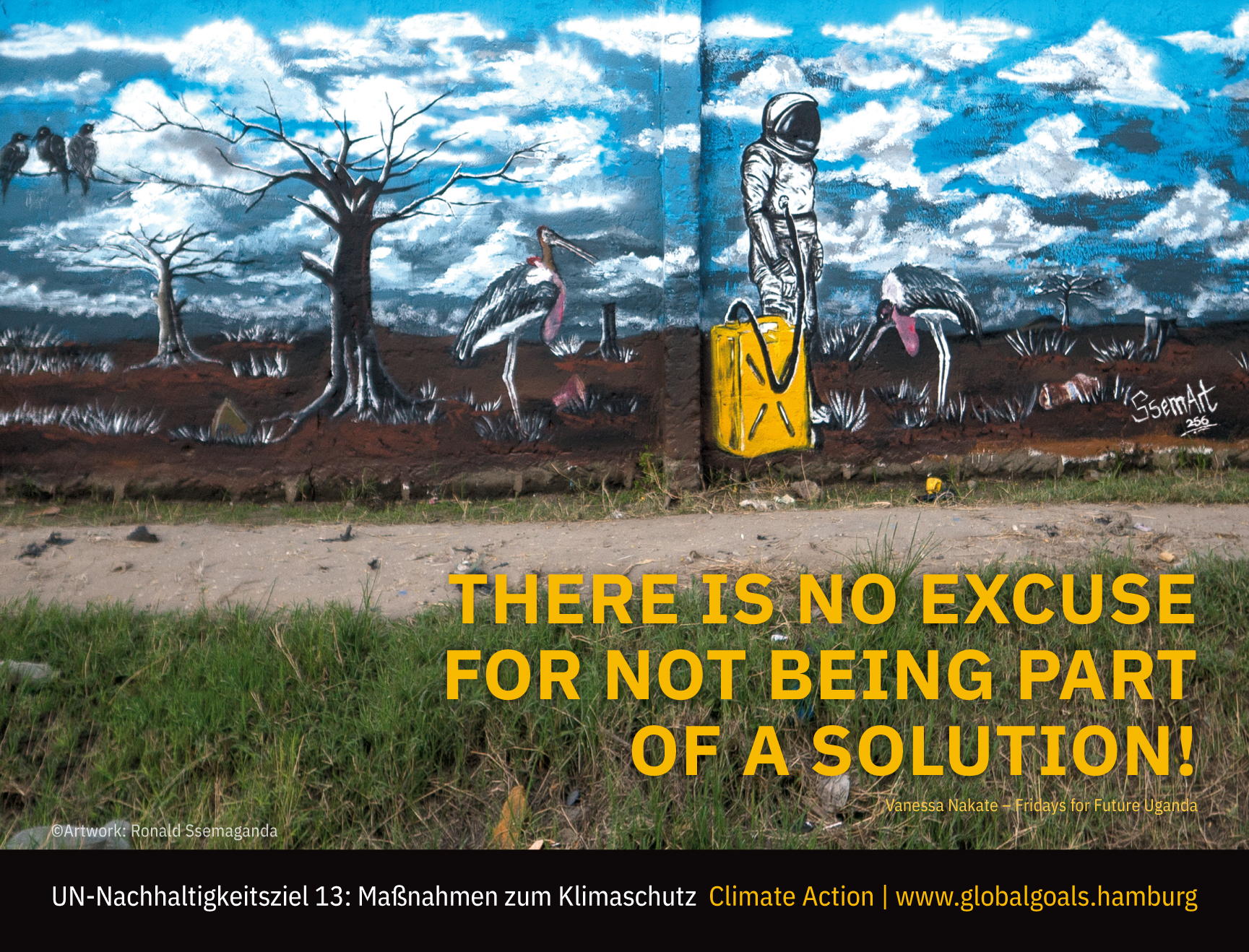
Climate scientists largely agree that climate change—or more accurately, the climate crisis—is caused by human activities. The fifth assessment report from the Intergovernmental Panel on Climate Change (IPCC) clearly confirms that the climate is currently changing and that these changes are primarily driven by human influence. A summary of the impacts of climate change is also provided in the scientific report by the Potsdam Institute for Climate Impact Research (PIK) and another special report from the IPCC released in the fall of 2018.
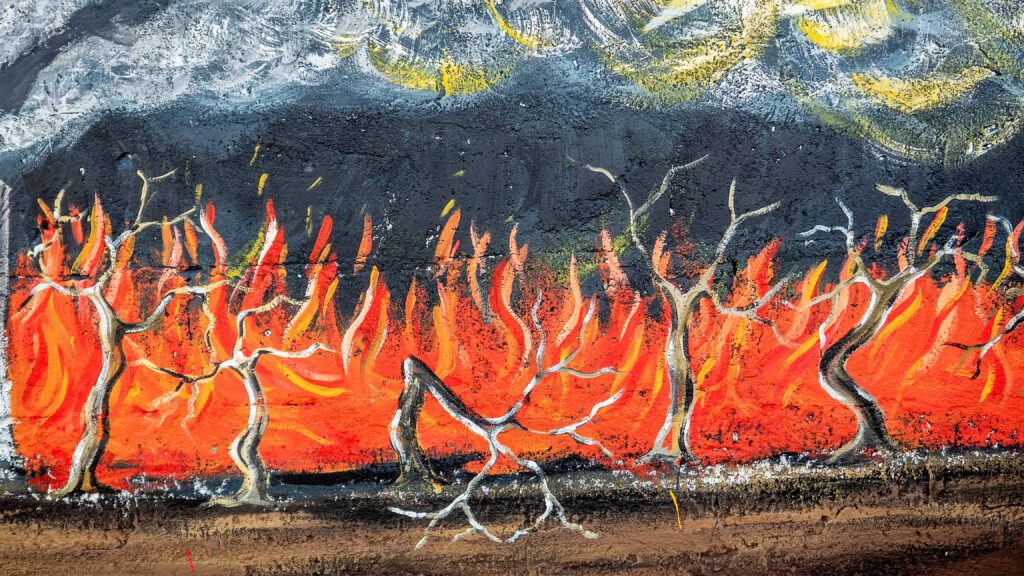
It is primarily the activities of people in highly industrialized countries that, through their intense use of fossil fuels and resource-intensive, imperial lifestyles, are responsible for the majority of greenhouse gas emissions and thus driving global warming. The impacts of this climate crisis, however, are mainly felt by populations in the Global South, particularly those groups that are most dependent on stable climatic and ecological conditions, such as indigenous and small-scale farming communities—especially the women who are responsible for family care, health, and food security.
These groups, along with families living in poverty, day laborers, migrant workers, refugees, and persecuted populations, as well as the elderly, sick, and other marginalized communities, often have limited capacity to adapt to climatic changes or protect themselves from extreme weather events. In contrast, highly industrialized nations have the financial resources and technology to adapt to and protect against the consequences of climate change. These resources have been accumulated through the (colonial) past and the current exploitative global economic system that has driven the very activities leading to climate change.

The existing global inequalities are further exacerbated and cemented by the fact that the most affected populations are often underrepresented in the crucial decision-making bodies and debates, both locally and internationally.
Dealing with and adapting to global warming must therefore be framed in much broader economic, social, and power-political contexts and treated as a matter of global justice. In short: it is about climate justice, the future viability of a capitalist-industrial “fossil” lifestyle, and the redistribution of power and resources.
As a result, the growing international movement for climate justice is deeply intertwined with concepts such as DeGrowth (post-growth), Common Good Economy, decolonization, anti-racism, human rights, gender equality, and demands for ecological farming, fair trade, and the vision of a “Good Life for All.” These ideas all call for a shift in how resources and power are shared, as well as a profound transformation of societal values and structures to achieve a just and sustainable future for everyone.

The Global Sustainability Goal 13 calls for the immediate action of the international community to combat climate change and its impacts.
The sub-goals include strengthening the resilience and adaptive capacity of all countries to climate-related hazards and natural disasters, integrating climate protection measures into national policies and strategies, raising public awareness, improving human and institutional capacities in the fields of climate protection and climate adaptation, setting up a Green Climate Fund, and promoting planning and management capacities for climate change in small countries and island states—particularly focusing on women, young people, and local and marginalized communities. The full text of SDG 13 (and the entire 2030 Agenda) can be found here.
A significant step towards achieving these goals was the Paris Agreement (COP21), which entered into force in November 2016. In this agreement, the participating countries committed to limiting the global temperature rise to well below 2°C (preferably to 1.5°C) compared to pre-industrial levels, achieving a balance between emissions and greenhouse gas reductions in the second half of this century, and providing a budget for active climate protection policies and climate adaptation.
However, in the years following the agreement, few countries have fully adhered to these commitments. The United States even withdrew from the Paris Agreement. Meanwhile, greenhouse gas emissions continue to rise, putting the targets at risk and worsening the global climate crisis.

The website klimafakten.de provides up-to-date, well-researched information from climate science and climate communication. Developments in national and international climate policy are reported on, among others, by the journalists at Klimareporter. In November 2016, the German federal government adopted a long-term Climate Action Plan 2050, which envisages that Germany will become “largely greenhouse gas neutral” by the middle of the century. However, experts and climate activists have widely criticized the measures adopted under this long-term strategy as insufficient.
A more ambitious climate plan was presented by the Hamburg-based association GermanZero in autumn 2019: in their view, measures such as a rapid transition to renewable energy, expansion of public transport, increased resource and energy efficiency, promotion of closed production and economic cycles, targeted consumer education, and the protection of natural carbon dioxide sinks (forests, peatlands) could enable Germany to achieve climate neutrality as early as 2035.
In Hamburg, a new climate plan and a new Climate Protection Act were adopted in December 2019. Through various measures, CO₂ emissions in the Hanseatic city are to be reduced by 55 percent by 2030, and Hamburg is to become climate neutral by 2050. A critical assessment was published by the Hamburg Future Council, which described the plan in parts as “lacking courage” and criticized the continued absence of an overarching sustainability strategy.

Numerous institutions, projects, and initiatives in Hamburg are committed to climate protection and climate justice, linking these efforts to a socio-ecological transformation.
A selection follows: