Story of SDG 13: Climate Action
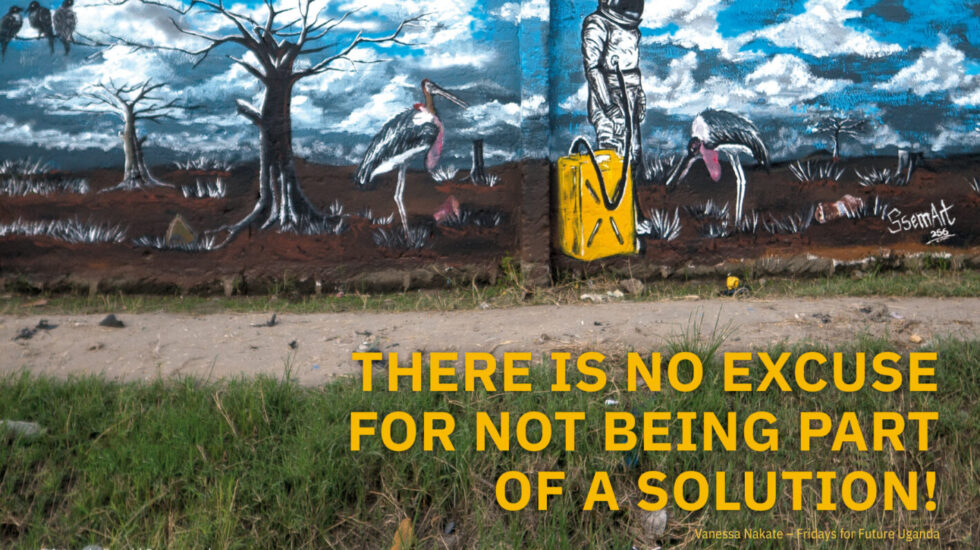
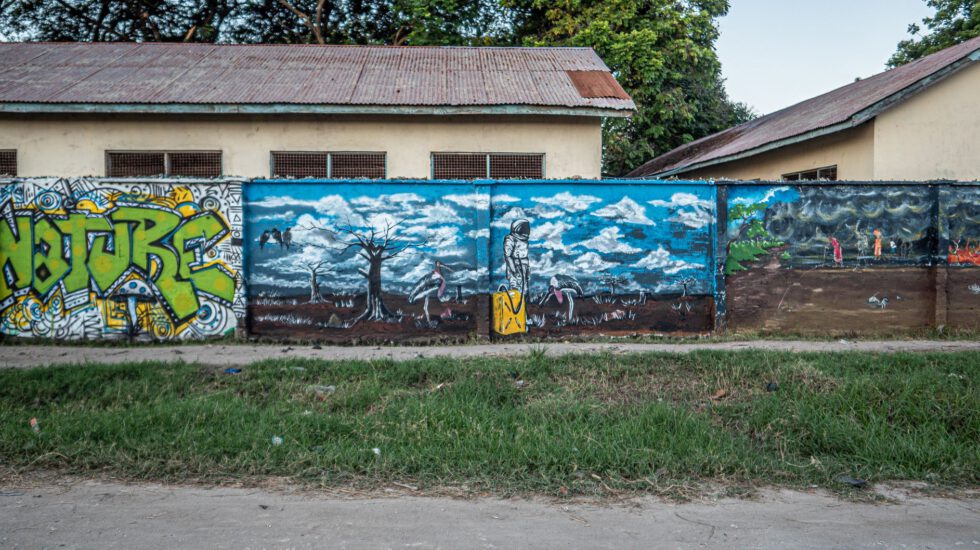
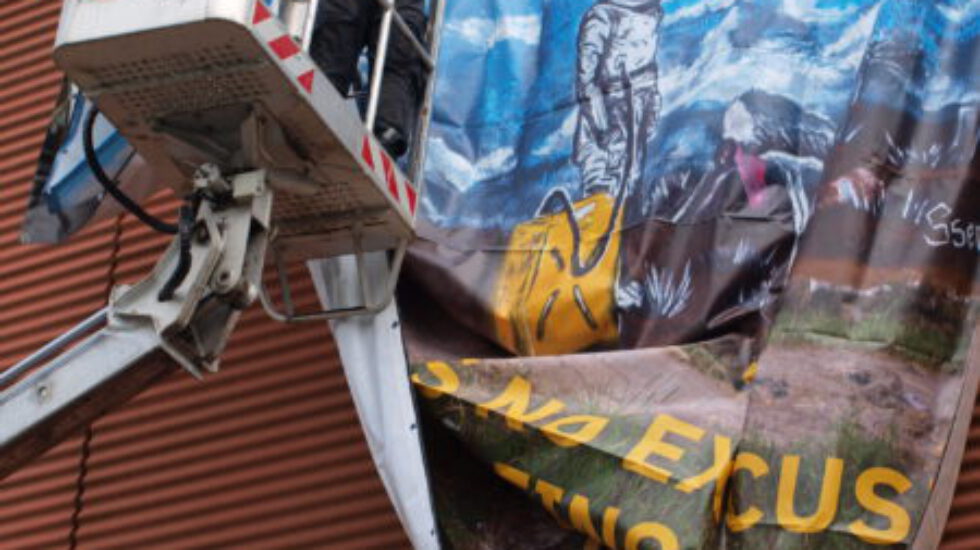
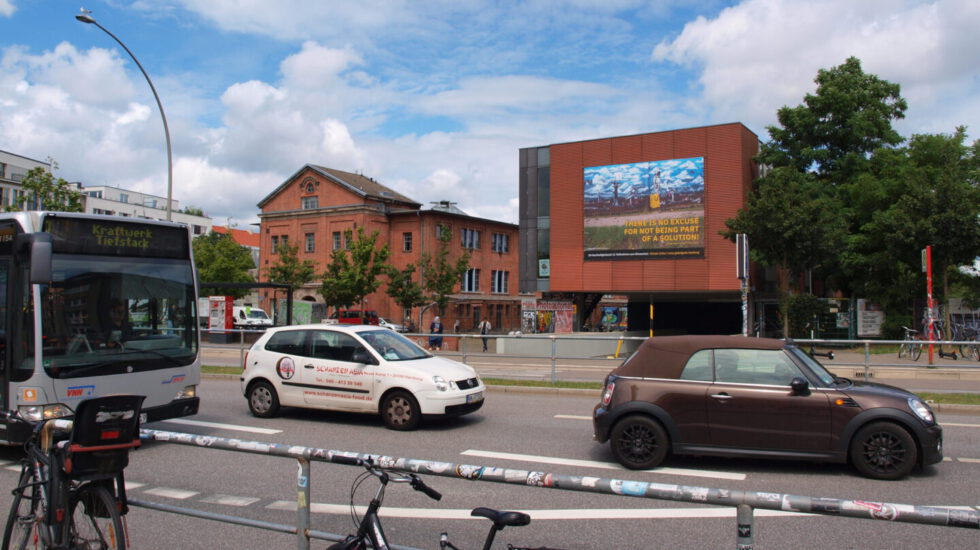
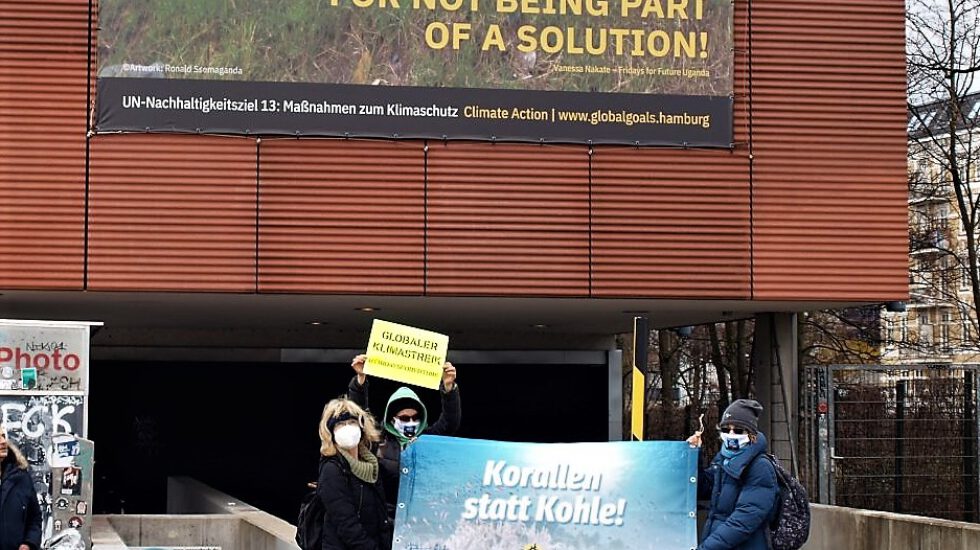
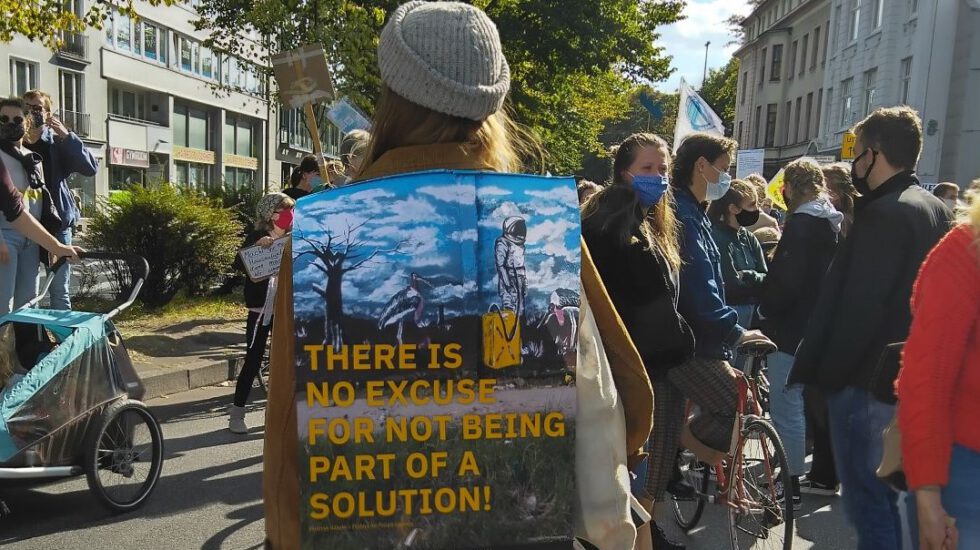
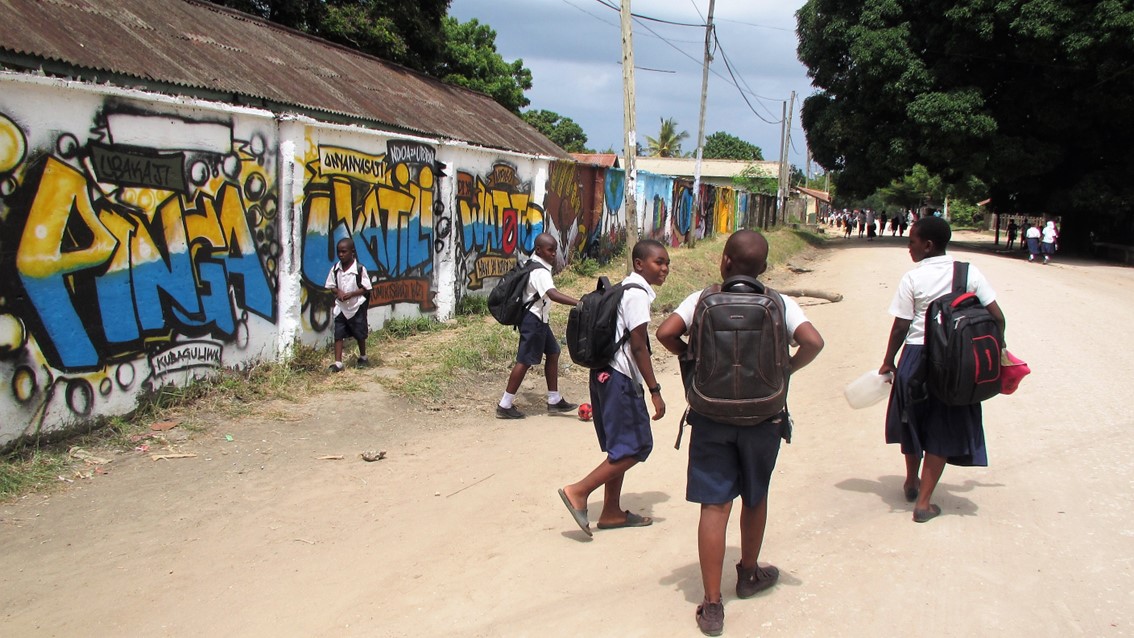
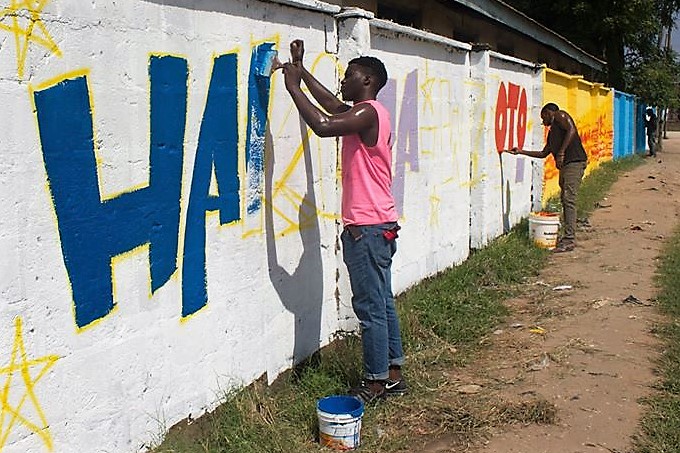
The motif of the mural banner for SDG 13 was designed by Ronald SSemaganda from Kampala, Uganda. It was created during an international cultural project in Dar es Salaam, Tanzania. The port cities of Hamburg and Dar es Salaam are linked by a city partnership—and since 8 July 2020 also by a mural that can be seen in both cities.
Ronald is an artist, musician, dancer, and actor in Uganda. In Kampala, he works as a group leader at the Sosolya Undugu Dance Academy. In June 2022, his first CD, “Yenze,” was released.
How he came to this work, what art means to him, and the ideas he connects with his motif are described in the following interview, which we conducted with him in May 2020:
Ronald, you are a dancer, musician, photographer, author, and visual artist. How did you come to art and painting?
I started painting when I was very young. I often watched my older brother as he made sketches and drawings. It always gave me a wonderful feeling to see how the images came to life. Gradually, I learned from him and then began to paint myself in the way he taught me. I have never stopped since and have continued to develop my skills.
How did you come to take part in the SDG mural project in Kigamboni/Dar es Salaam?
I am involved with the SOSOLYA UNDUGU DANCE ACADEMY in Kampala, Uganda, and Brother Marc, one of the leading figures there, told me about the project. Marc was in Germany as part of the KinderKulturKarawane for a youth project on climate change and learned there about the international mural project in Dar es Salaam. He recommended me as a participant, and that’s how I got in touch with the organizers at the Kigamboni Community Centre in Dar es Salaam.
What does art mean to you? Do you believe art can change things in the world—and if so, how?
Art means an extraordinary amount to me. It is an important medium through which I can express my ideas and feelings and share them with others. Art constantly encourages me to try something new. Through this process, I discover myself more and more and explore my own limits.
I believe art is one of the most effective means we have to change the world. It gives us the opportunity to share our ideas and thoughts in a friendly and peaceful way. As a creative force, art brings people from different places together. By sharing their thoughts artistically, people have the chance to develop their own opinions and attitudes. For me, art has no boundaries, and with today’s social media platforms, artists can address important issues and create global change—no matter where they are. Through collaboration and joint artistic projects, political messages and statements can be made accessible to people all over the world.
Can you tell us more about the mural – its title, the motif, its message? Did you paint it alone?
While painting, I didn’t think about a title at first. Even afterward, it took me some time before the title “FUTURE WORLD” felt right.
I want to show what our planet will look like as a result of climate change if we do not act now and stop the destruction as quickly as possible.
The image shows a dried-out landscape with withered trees, plastic bottles, a wrecked car, and a person breathing air from a yellow plastic canister. This is the image of Earth I have in mind when I think about the consequences of global warming: a world without plants, without oxygen to breathe because all plants are dead, poisoned by waste – a planet without life. We would have to live like “astronauts,” wearing masks and protective suits. Plastic materials would be the only thing left. Plastic would be everywhere – we would eat it and breathe it in; our bodies would live on plastic.
The birds and the dead trees indicate that everything we do now affects not only us, but all living beings on this planet. Their survival is linked to ours, and we must take responsibility for everything we have done and continue to do.
With this image, I wanted to show what our planet will look like if we do not immediately begin to become part of the change. I want people to reflect on nature, animals, and the future.
The mural project was a collaborative effort. We artists supported and helped each other. Most of the image comes from me, but it was not painted entirely by me alone.
What gives you strength and inspires you when you think about the future? And what is your greatest concern?
I am young – I still have a future ahead of me. It is my responsibility to be the future I want to see: a world with clean air, living plants – a happy world. What I do now has an impact on how I will live in the future. By painting about issues such as the climate crisis, I create public awareness and thus advocate for change.
My greatest concern is the vast difference in people’s knowledge and awareness, both within and between countries. Many people do not think at all about the destructive impact their actions have on the climate. Some do not even believe that climate change is real.
With my means as a painter, my hands are also tied in certain ways—there are things I cannot influence or change. We all need to work together if we want to make a difference, including governments worldwide. Everyone must contribute within their means—which unfortunately is not the case today. By the time everyone realizes that the climate crisis is real and that action is needed, it may already be too late.
Thank you very much for the interview!
More about the mural project in Dar es Salaam can be found in this video featuring the Tanzanian artist Leonard Meck.

Two years after the installation of the SDG 13 banner, Ronald Ssemaganda visited Hamburg at the invitation of the KinderKulturKarawane together with the Sosolya Undugu Dance Academy. At that time, a new mural for SDG 12 (Responsible Consumption and Production) was being created by an art class at the Marion Dönhoff Gymnasium. Ronald visited the students, talked with them about their work, and encouraged them to continue their artistic and civic engagement. The encounter left a lasting impression on the young people.